How to Secure Fragile Artwork for a Long-Distance Move
Moving a painting, framed print, sculpture, or mixed-media piece over a short distance is one thing. Moving it across counties, motorway miles, and a few long, bumpy hours is another story altogether. If you are trying to work out how to secure fragile artwork for a long-distance move, the goal is simple enough: prevent vibration, pressure, moisture, and careless handling from turning something valuable or sentimental into an expensive repair job. Truth be told, the most fragile pieces are often the ones packed in a hurry right at the end.
This guide walks you through the practical side of protecting artwork properly, from materials and wrapping methods to loading, labelling, and the little decisions that make a big difference. You will also see when professional help makes sense, what mistakes are most common, and how to plan the move so the art arrives looking the same as when it left. Let's face it, nobody wants to unwrap a canvas and find a corner dented, a frame split, or glass shattered everywhere.
Table of Contents
- Why it matters
- How the process works
- Key benefits and practical advantages
- Who this is for and when it makes sense
- Step-by-step guidance
- Expert tips for better results
- Common mistakes to avoid
- Tools, resources and recommendations
- Law, compliance, standards, or best practice
- Options, methods, or comparison table
- Case study or real-world example
- Practical checklist
- Conclusion
- Frequently asked questions
Why How to Secure Fragile Artwork for a Long-Distance Move Matters
Artwork is vulnerable in a few different ways, and long-distance moves tend to expose all of them at once. A framed piece can be scratched by loose packing material, a canvas can be punctured by a sudden knock, and works on paper can absorb moisture if they are not sealed correctly. Even if something looks sturdy, repeated vibration over a long journey can loosen fittings, stress corners, or cause glass to crack later in transit.
The danger is not always dramatic. Sometimes the damage is subtle. A tiny pressure mark on a canvas. A hairline crack in a frame. A backing board that shifted just enough to let dust in. If you have ever lifted a box and heard something shift inside, you know that awful little moment of doubt. That is the moment you want to avoid entirely.
It also matters because artwork is not always replaceable. Some pieces have financial value, but many carry personal value that is much harder to quantify. A family portrait, a gallery print bought on a special trip, or a child's first framed drawing may be worth more emotionally than anything else in the house. Securing it properly is not overcautious. It is sensible.
For households and businesses alike, careful packing also reduces the stress on everyone involved. If you are coordinating a broader move, it helps to think of art protection as part of the wider removals plan, not a last-minute side task. Services such as packing and unpacking services or a well-planned home move can be useful if you want extra support with delicate items.
How How to Secure Fragile Artwork for a Long-Distance Move Works
The basic idea is to create layers of protection that each solve a different problem. You are not only cushioning the artwork. You are limiting movement, controlling humidity exposure, preventing surface damage, and making sure the item is easy to handle safely on moving day.
In practice, the process usually looks like this: inspect the piece, clean it gently if appropriate, protect the face, separate fragile elements, wrap it in archival or acid-free material where needed, add padding, place it in a rigid box or crate, then secure that package inside the vehicle so it cannot slide, tip, or stack under pressure. Simple on paper. A bit fiddly in real life, especially if the artwork is oversized or unusually shaped.
The key is to think in terms of motion. Long-distance transport means there will be braking, cornering, suspension movement, and road vibration. The packaging has to absorb that motion before the art does. If the item can shift inside its box, the protection is incomplete. If the box can move in the van, the same problem comes back at a larger scale.
That is why good packing is always paired with good loading. A sturdy pack job can still fail if it is wedged next to a heavy wardrobe with no restraint. If you are arranging a bigger relocation, it may help to choose the right vehicle and loading method through a moving truck or a flexible man and van service, depending on the size and complexity of the job.
Key Benefits and Practical Advantages
Securing fragile artwork properly is not just about damage prevention, though that is the obvious headline. It also gives you control, which matters more than people expect.
- Less risk of impact damage: Layered packing reduces the chance of knocks, punctures, and frame splits.
- Better protection from vibration: Long journeys create constant low-level movement that can loosen weak points unless the piece is immobilised.
- Improved moisture resistance: The right wrapping and boxing can help reduce exposure to damp air, condensation, and brief weather changes while loading.
- Cleaner handling: Proper labels and sealed packaging reduce the chance of fingerprints, dust transfer, and accidental contact.
- Easier loading and unloading: A well-prepared piece is safer to carry and simpler to position upright.
- Lower stress on moving day: Everyone knows what is fragile, which saves time and avoids that slightly chaotic "where do we put this?" moment.
There is also a commercial benefit. If you are moving artwork for an office, showroom, gallery, or home staging project, good packing protects deadlines as well as assets. Damaged artwork can delay setup and create avoidable replacement costs. In that sense, careful preparation is a small administrative win too. Not glamorous, but useful.
Expert summary: The safest long-distance artwork move combines the right materials, the right box or crate, and the right placement in the vehicle. Miss one of those three and the risk rises quickly.
Who This Is For and When It Makes Sense
This approach makes sense for almost anyone moving artwork over a meaningful distance, but some situations call for extra care.
- Homeowners moving between cities or counties: Even a single canvas can suffer if packed carelessly in a shared load.
- Collectors and art buyers: Purchased pieces may have fine finishes, delicate frames, or glazing that needs special treatment.
- Artists transporting their own work: Original pieces often need a more tailored packing plan than standard household items.
- Interior designers and stylists: Temporary or permanent installations often include valuable, awkward, or oversized works.
- Offices and commercial premises: Lobby art, framed branding pieces, and display items may need careful handling during a relocation.
It makes especially good sense if the move will involve overnight storage, mixed-load transport, winter weather, or a vehicle shared with furniture and boxes. In those situations, artwork should never be treated like an ordinary flat-packed item. It isn't. It is more like a fragile surface with personality, which sounds dramatic but is fairly accurate.
If your move is part of a bigger relocation, browsing options such as office relocation services or commercial moves can help you judge whether you need a specialist packing approach or a full managed move.
Step-by-Step Guidance
Here is the practical sequence I would use for most fragile artwork. Adjust it for the material, size, and value of the piece. No need to overcomplicate a small framed print, but don't underdo an oil painting either.
1. Assess the artwork before you pack it
Start with a quick condition check. Look for loose glass, lifted corners, weak frames, flaking paint, torn backing, or areas where the surface is already vulnerable. If the artwork is already damaged, photograph it first. That gives you a record of its pre-move condition, which is useful if you are insuring the move or simply want to keep track of any changes.
Take note of the frame type, whether the front is glass or acrylic, and whether the piece is on canvas, paper, board, or a mixed medium. The materials matter because different surfaces react differently to pressure and humidity. A paper print needs more moisture control than a sealed acrylic piece, for example.
2. Clean only what is safe to clean
Do not start polishing artwork like you are cleaning a kitchen window. If you are unsure, leave it alone. A light dusting of the frame may be fine, but the surface of the artwork itself should only be cleaned by someone who knows the medium. A soft, dry microfibre cloth is usually enough for the outer frame if it is robust.
If a piece is valuable, old, or delicate, a conservator is the right call. Better a slightly dusty painting than a damaged one. That is the honest trade-off.
3. Protect the face of the artwork
For framed pieces with glass or acrylic, cover the front with a clean sheet of glassine or acid-free protective paper if appropriate, then add a layer of cardboard or foam board cut slightly larger than the frame. This helps prevent the front surface from flexing and adds impact protection.
For canvases, avoid anything that touches the painted surface directly if the paint is raised or unstable. Some artworks can be lightly faced with protective material, but this should be done with care. If in doubt, use a rigid shield and avoid pressure on the image area.
4. Wrap the corners and edges first
Corners are the first part to get hit. They take most of the abuse during carrying, setting down, and stacking. Use corner protectors, foam, or folded cardboard to cushion them before wrapping the whole piece. Edge protection is especially important for framed work with delicate moulding.
Then wrap the item in bubble wrap or another cushioning layer, but keep the wrap snug rather than loose. Loose wrap shifts. Shifting wrap is bad news. You know the rest.
5. Place the piece in a rigid box or crate
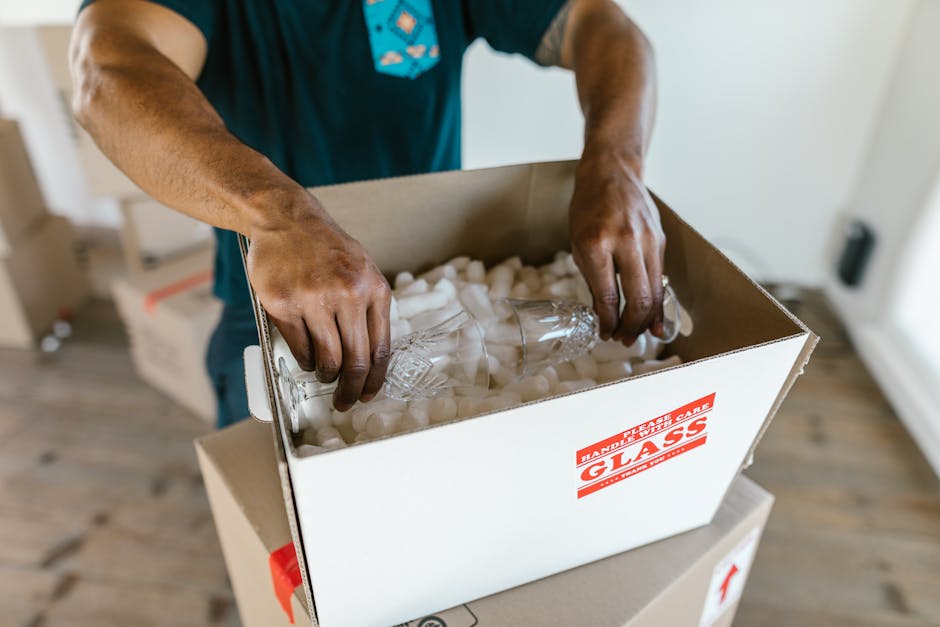
A flat, strong box or purpose-made crate is much better than a simple wrap. The container should leave just enough room for protective padding on all sides without allowing the piece to move. Fill any voids with soft packing material so the artwork sits firmly in place.
For large or high-value items, crating is worth considering. It is especially sensible for long-distance transport where the box may face more handling points, more time on the road, and more opportunities for pressure damage.
6. Seal and label it clearly
Mark the package as fragile, but do not rely on the label alone. Labels help people act carefully, yet the actual protection still has to do the heavy lifting. Add orientation arrows where relevant and note whether the piece must stay upright.
Write the destination room on the outside if useful. For example: "Living room wall - handle upright." That small note can save time during unloading and reduce the risk of the box being laid flat by mistake.
7. Load it upright and away from pressure
Artwork generally travels best in an upright position, supported so it cannot tilt. Never place a framed piece under a heavy box, mattress, or loose furniture item. The pressure from a journey can do more damage than an outright knock.
If the van is shared with furniture, ask for the artwork to be loaded where it will not be crushed. Some removals teams can separate delicate items from the main load, which is often the safer route. If you need a vehicle-only option for smaller loads, man with van arrangements can be more manageable for artwork than a full mixed-household load, depending on what else is moving.
8. Unpack carefully and let the artwork settle
When the move is over, do not rush to tear open the packaging. Bring the box into a clean, dry room and open it slowly. Check for trapped condensation before removing any facing materials. If the piece has travelled through a cold environment, let it acclimatise a little before hanging it in a warm room.
That small pause matters more than people think. Cold glass meeting warm indoor air can create condensation, and damp packaging can transfer moisture if it is removed too fast. A couple of measured minutes now can save a headache later.
Expert Tips for Better Results
A few small decisions often make the biggest difference. In our experience, these are the details that separate an okay pack from a reliable one.
- Use acid-free materials for works on paper: Regular paper can transfer acidity over time and leave marks.
- Keep materials clean and dry: Dust, grit, and damp packaging are all avoidable problems.
- Double-box smaller pieces: A snug inner box inside a slightly larger outer box gives extra shock protection.
- Separate glazed pieces from other heavy items: Glass and dense furniture should not share pressure points.
- Photograph the piece and its packing before transport: This helps with claims, records, and general peace of mind.
- Use soft supports, not tight compression: The goal is immobilisation, not squeezing the life out of the frame.
- Check the vehicle floor: A clean, dry load area matters more than most people expect, especially after a wet British morning.
If you are moving a whole property, one practical habit is to pack the artwork early rather than at the very end. That may sound counterintuitive, but it stops the piece from becoming a rushed afterthought when the kettle has already been packed and tempers are getting a little thin.
Another useful trick: keep a separate "art first" label set so the artwork is immediately recognisable on arrival. Not glamorous. Very effective.
Common Mistakes to Avoid
Most damage happens because someone tried to save time, space, or materials. Fair enough in the moment, but it usually costs more later.
- Using newspaper directly on artwork: Ink transfer and surface abrasion are both real risks.
- Leaving empty space in the box: Movement inside the package is one of the main causes of damage.
- Stacking heavy items on top: Even a strong frame may not survive prolonged pressure.
- Wrapping too tightly: Too much tension can stress frames, warp surfaces, or damage delicate moulding.
- Ignoring humidity: Damp conditions can affect paper, canvas, and backing materials.
- Forgetting to secure the load in the vehicle: A perfect box still fails if it slides into other cargo.
- Rushing the unpacking: Wet, cold, or compressed materials need a moment to settle.
One very common mistake is assuming bubble wrap alone is enough. It is not. Bubble wrap cushions, yes, but it does not replace rigidity. Another one is packing framed artwork face-to-face. That can create pressure on the glass and corners. You really do want separation between pieces, even if they look similar in size.
Tools, Resources and Recommendations
You do not need a museum-grade packing lab, but the right materials help a lot. A modest toolkit is usually enough for most domestic moves.
| Item | What it helps with | Best used for |
|---|---|---|
| Glassine or acid-free paper | Protects surfaces from rubbing and transfer | Paper art, prints, some framed pieces |
| Corner protectors | Cushions the most vulnerable points | Framed artwork, mirrors, stretched canvases |
| Bubble wrap | Absorbs shock and vibration | Outer cushioning layer |
| Foam board or cardboard sheets | Adds rigidity and front-face protection | Frames, glazed pieces, flat artwork |
| Rigid art box or crate | Prevents bending and external pressure | Long-distance or high-value items |
| Packing tape and markers | Secures and labels the package | All artwork packages |
If you are moving several items at once, it may be worth grouping your packing around the wider move plan. For example, if you are already booking removal truck hire or a full service with house removalists, ask how delicate items are separated, secured, and loaded. That simple conversation can reveal whether the team handles artwork carefully enough for your needs.
It is also worth checking the company's approach to protection and handling in its broader policies. A page like insurance and safety can give you a sense of how risk is managed, while health and safety policy signals whether the company takes handling seriously in principle as well as in practice.
Law, Compliance, Standards, or Best Practice
For most domestic moves, there is no special legal rule that says exactly how artwork must be packed. Still, there are sensible expectations around safe handling, clear communication, and reasonable care, especially if a moving company is involved. In the UK, businesses moving goods for customers are generally expected to act carefully, follow their own safety procedures, and make sure items are handled in line with the service agreed.
If you are using professional movers, it is wise to check what is and is not covered, how claims are handled, and whether fragile items need special declarations. That is not being fussy. It is being clear. Any valuable or irreplaceable piece should be disclosed before the move so the right packing and loading approach can be chosen.
Best practice usually means:
- declaring fragile or high-value artwork early
- using suitable packaging for the item's material and size
- keeping records of condition before transit
- ensuring items are not exposed to obvious avoidable pressure or weather
- confirming any insurance or liability limits in advance
If you are unsure whether a piece needs specialist handling, treat it as though it does. That is the safe side of the line, and honestly, it is usually the cheaper one in the long run.
Options, Methods, or Comparison Table
Different pieces need different levels of protection. A small framed print and a large oil painting should not be treated the same way. Here is a practical comparison to help you choose.
| Method | Best for | Strengths | Limitations |
|---|---|---|---|
| Basic wrap and box | Small, sturdy framed pieces | Quick, affordable, easy to handle | Less protection for long or rough journeys |
| Double-boxing | Medium-sized artwork and prints | Good shock absorption and stability | Bulkier and takes more material |
| Foam-board sandwich | Flat artwork and works on paper | Prevents bending and face damage | Needs careful sizing |
| Custom crate | Large, fragile, or high-value pieces | Best rigidity and long-distance protection | More expensive and may require planning |
| Professional packing service | Complex or valuable collections | Experienced handling, less stress | Higher upfront cost |
As a general rule, the more unusual, valuable, or delicate the piece, the more you should lean towards rigidity and professional handling. A mass-produced print can often travel safely in a reinforced box. A stretched canvas with delicate paint texture? That deserves more thought.
For people who want extra support, booking a wider moving service such as furniture pick-up alongside careful packing can sometimes create a better overall load plan. It reduces clutter in the vehicle and gives artwork a cleaner space to travel in.
Case Study or Real-World Example
Here's a straightforward example. A family moving from one part of the UK to another needed to transport three framed prints, a medium canvas, and a small sculpture. Nothing museum-level, but all of it had sentimental value and one print had a glass front. They had originally planned to wrap everything together quickly on the morning of the move. Classic mistake waiting to happen.
Instead, they packed the framed prints the day before. Each was dusted lightly, faced with protective paper, corner-protected, and boxed with enough padding to stop movement. The canvas was separated from the framed items and kept upright. The sculpture was wrapped in soft material, then placed in a smaller rigid box inside a larger one. On loading day, the artwork went in last and stood in a secure upright section of the van, away from heavy furniture and loose boxes.
Nothing dramatic happened. Which is exactly what you want. The pieces arrived clean, intact, and ready to hang. The only slightly funny part was that the family kept apologising to the boxes as they carried them. Fair enough. When something matters, you do start talking to it a bit.
The real lesson is that long-distance protection is less about expensive materials and more about consistency. Good packing, correct orientation, and a sensible load plan. That combination does most of the work.
Practical Checklist
Use this checklist before moving day. It is simple, but it catches the things people often forget.
- Inspect every artwork for existing damage.
- Photograph each piece before packing.
- Clean only the safe outer surfaces.
- Use acid-free or protective facing material where appropriate.
- Protect corners and edges first.
- Wrap each item individually.
- Use a rigid box, double box, or crate as needed.
- Fill all voids so nothing shifts inside.
- Label the package fragile and upright if necessary.
- Keep artwork separate from heavy furniture and loose loads.
- Load it last and unload it first where possible.
- Let cold items acclimatise before fully unpacking.
- Check condition again after the move.
Quick reminder: if a piece feels awkward to pack, it probably is awkward to pack. That is your cue to slow down rather than improvise.
Conclusion
Securing fragile artwork for a long-distance move is really about respecting how vulnerable the piece is to movement, pressure, and moisture. Once you understand that, the rest becomes a matter of layering protection properly and keeping the item stable from start to finish. The safest moves tend to be the ones where the artwork is packed early, loaded carefully, and unpacked with patience rather than speed.
Whether you are moving a single framed print or a small collection, the same principles apply: protect the surface, immobilise the item, use rigid packaging, and give it a quiet place in the vehicle. Do that well and you dramatically reduce the chances of damage. And if you are unsure, it is always better to choose the more careful option. Always.
Get a free quote today and see how much you can save.
For a move that feels calmer and more controlled, start with the delicate pieces and build the rest of the plan around them. It makes the whole day easier, and your artwork will thank you in its own silent way.
Frequently Asked Questions
What is the safest way to pack fragile artwork for a long-distance move?
The safest method is usually to protect the face, cushion the corners, wrap the piece individually, and place it in a rigid box or crate with no movement inside. The package should then be secured upright in the vehicle so it cannot slide or be crushed.
Should artwork be wrapped in bubble wrap directly?
Not always. Bubble wrap is useful as an outer cushioning layer, but it should not touch delicate surfaces directly if there is any risk of imprinting or abrasion. For paper art and valuable pieces, use protective facing material first.
Can I move framed art with glass without removing the glass?
Yes, but it should be packed very carefully. Glass-fronted pieces need corner protection, rigid support, and enough cushioning to reduce the chance of cracking. If the glass is already loose or damaged, it is safer to address that before moving.
How do I protect a canvas painting during transport?
Keep the canvas from being pressed on, bent, or exposed to moisture. Use a rigid shield or crate if needed, and avoid anything that rubs against the painted surface. For textured or fragile paint layers, extra caution is wise.
Is it better to lay artwork flat or keep it upright in the van?
Most framed or rigid artwork travels better upright, supported so it cannot tip. Flat stacking increases the risk of pressure damage, especially on longer journeys. Only very stable, well-protected items should be laid flat, and even then carefully.
Do I need a custom crate for all fragile artwork?
No, not for all pieces. Smaller or sturdier artworks may be fine in a strong box with proper padding. Custom crating is more suitable for large, high-value, unusual, or very delicate works, where extra rigidity is worth the effort.
How far in advance should I pack artwork before a move?
Ideally, pack it before the final rush of moving day. A day or two in advance is often sensible for non-essential pieces, as long as they are stored safely in a dry, stable room. That gives you time to pack properly instead of rushing.
What should I do if the artwork is valuable or sentimental?
Treat it as a higher-priority item. Photograph it, use better materials, consider professional packing, and make sure the moving company knows what it is. If the piece cannot be easily replaced, do not cut corners on the packing method.
Can I use a normal cardboard box for artwork?
For small, low-risk pieces, a normal box may be acceptable if it is reinforced and well padded. For long-distance moves, though, a rigid art box or double-boxed setup is usually safer because it reduces bending and impact.
How do I know if a mover will handle artwork properly?
Ask how they pack fragile items, how they load them, whether they keep artwork upright, and what their process is for claims or insurance. A company that can explain its handling method clearly is usually more reassuring than one that brushes the question aside.
What is the biggest mistake people make when moving artwork long distance?
The biggest mistake is assuming that a bit of wrapping is enough. Artwork needs stability, not just padding. If the item can move inside the packaging or shift in the vehicle, the protection has not been finished properly.
Should I unpack artwork immediately after arrival?
Unpack it carefully, but not hastily. If the piece has travelled through cold or damp conditions, let it acclimatise a little before removing all layers. That helps avoid condensation and reduces the chance of hidden moisture issues.
If you are planning a larger move and need support with secure handling, planning, or transport, it can help to review the company's wider services and policies, including about us, pricing and quotes, and contact us before you decide.